
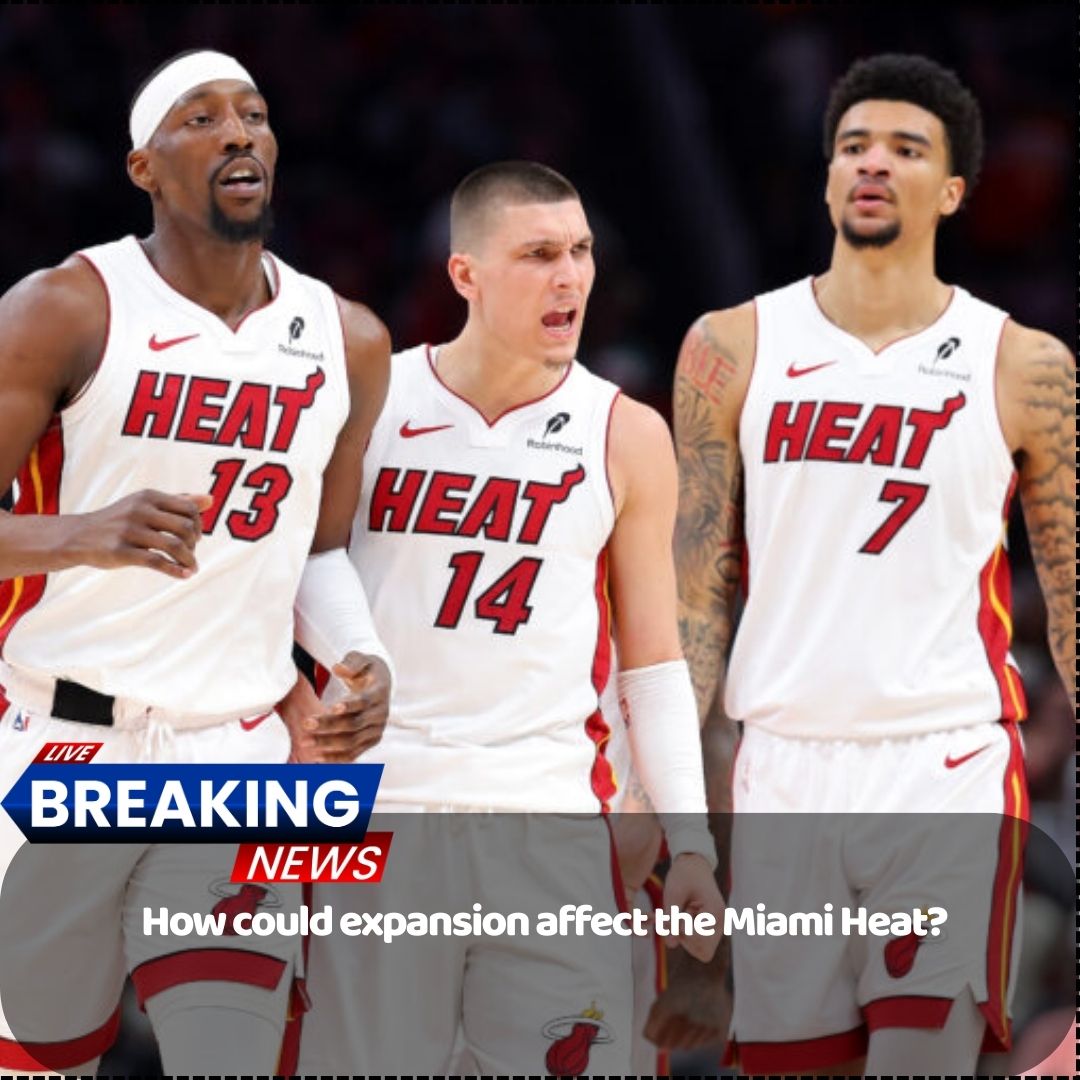

The possibility of NBA expansion is no longer a distant concept but an increasingly realistic scenario, and with it comes a ripple effect that could reshape roster strategies across the league, particularly for teams like the Miami Heat who thrive on depth, development, and long-term planning.
If expansion does materialize in the near future, it would trigger an expansion draft, a mechanism that historically forces franchises to make difficult decisions about which players to protect and which to expose to potential selection.
Under the current framework, teams are typically allowed to protect up to eight players under contract, while unprotected players become eligible to be selected by incoming expansion teams, fundamentally testing roster construction philosophies.
For Miami, a franchise known for balancing veteran leadership with emerging talent, such a scenario would present a complex puzzle, especially given the number of intriguing young prospects currently on the roster.
At the core of the Heat's protected group would almost certainly be foundational veterans such as Bam Adebayo, Tyler Herro, Andrew Wiggins, and Davion Mitchell, each bringing proven production and stability to the lineup.
These players represent the established backbone of the team, combining defensive versatility, scoring ability, and playoff experience that aligns with Miami's competitive identity.
Beyond that veteran core lies a group of younger players whose value may ultimately shape how the Heat navigate an expansion draft scenario.
Among them, Kel'el Ware stands out as perhaps the most intriguing prospect, offering a rare combination of size, shot-blocking, rebounding, and emerging perimeter skill that hints at significant long-term upside.
Ware's ceiling is widely regarded as the highest among Miami's young talents, particularly if he can develop consistency in his motor and fully integrate his inside-out game into the team's system.
In a re-draft scenario, players like Jaime Jaquez Jr., Pelle Larsson, and Kasparas Jakučionis would likely see their stock rise significantly, reflecting their versatility and ability to contribute across multiple facets of the game.
Each of these players brings positional size and adaptability, qualities that are increasingly valuable in the modern NBA, where lineup flexibility and two-way impact are essential components of success.
Given their trajectories, it would be difficult for Miami to justify leaving any of them unprotected, as they represent both immediate contributors and long-term assets within the organization's development pipeline.
However, roster protection limits inevitably force difficult trade-offs, and that is where the conversation becomes far more nuanced and potentially controversial.
One of the most debated cases is Nikola Jović, a 22-year-old forward whose development has not yet aligned with the expectations set when the team extended his contract prior to the season.
At the time, the extension was viewed as a calculated gamble, a move designed to secure a talented young player at a potentially team-friendly rate before his value could increase.
Instead, the situation has evolved in the opposite direction, as Jović has struggled to establish consistency, particularly in half-court offensive situations where his limitations have become more apparent.
His perimeter shooting, once considered a promising aspect of his game, has regressed, further complicating his fit within an offense that relies heavily on spacing and efficient scoring.
Confidence has also emerged as a recurring issue, with stretches of hesitant play impacting his overall effectiveness and raising questions about his readiness to contribute at a high level.
From a purely strategic standpoint, an expansion draft could offer Miami an unexpected form of relief, as the selection of Jović by another team would effectively remove his contract from the books.
Such an outcome, while not necessarily ideal from a developmental perspective, could provide additional financial flexibility and roster clarity moving forward.

At the same time, it is important to contextualize Jović's struggles within his age and experience level, as player development in the NBA is rarely linear and often requires patience.
Many players across the league have taken years to fully realize their potential, and Jović still possesses the physical tools and skill foundation that initially made him an intriguing prospect.
There remains a belief within certain circles that, given time and the right environment, he could still evolve into a meaningful contributor, even if that growth does not ultimately occur in Miami.
Another player who could be exposed in such a scenario is Myron Gardner, whose value lies less in star potential and more in his embodiment of the team's culture and work ethic.
Gardner represents the archetype of a Heat system player, someone who competes relentlessly, embraces physicality, and contributes in ways that may not always be reflected in traditional statistics.
Losing a player like Gardner would carry an intangible cost, as his presence reinforces the identity that Miami has cultivated over years of disciplined development and internal accountability.
However, history suggests that the Heat are uniquely equipped to replace such players, thanks to one of the league's most respected scouting and development infrastructures.
The organization has consistently identified and developed overlooked talent into meaningful contributors, a list that includes players such as Max Strus, Duncan Robinson, Gabe Vincent, Rodney McGruder, and Caleb Martin.
This track record provides a level of confidence that, even if depth pieces are lost, the franchise can replenish its roster with players who fit its system and culture.
Ultimately, the expansion draft scenario highlights the delicate balance between retaining proven talent and investing in future potential, a challenge that every team must navigate differently.
For Miami, the decision-making process would likely reflect its broader organizational philosophy, prioritizing players who align with its competitive identity while remaining adaptable to evolving roster dynamics.
While expansion remains hypothetical for now, the mere possibility forces teams to evaluate their assets with a sharper lens, considering not only current contributions but also long-term value and financial implications.
In that sense, the Heat's situation serves as a microcosm of the broader league, where every roster spot carries strategic weight and every decision can influence the trajectory of a franchise.
Should expansion become reality, Miami will face difficult choices, but if history is any indication, it will approach them with the same calculated precision that has defined its sustained success in the modern NBA.